



- Opera by Frank Martin
- First performed at the Königliches Opernhaus in Dresden on 9 December 1905
- Premiered on June 17, 1956 at the Vienna State Opera
- Sung in French with French and English surtitles
- Location: Bâtiments des Forces Motrices
- Duration: 3h
- Recommended for ages 12 and up
- First time at GTG
- Sung in English, dialogues in French, with French and English surtitles
- Location: Bâtiments des Forces Motrices
- Duration: 2h50 including intermission
- Recommended for ages 10 and up
Robert (Bob or Bobby to his friends) has it all: good looks, a vibrant social life, and a beautiful apartment in New York. While waiting for the ideal woman—if she even exists—he enjoys a string of affairs. For his thirty-fifth birthday, his friends throw him a surprise party, but his bachelorhood is the main topic of conversation. As he blows out his candles, Bobby wonders: what if it’s time to get married? The idea is tempting, but the little secrets of the couples around him—joyful neuroses, unspoken desires, various addictions—leave him perplexed. To avoid being alone, should one be in a bad relationship or prefer the company of friends? Or perhaps the secret to happiness as a couple lies in the art of compromise…
Acclaimed lyricist of West Side Story, Stephen Sondheim established himself in 1970 as a major Broadway composer thanks to the triumph of Company. With irony, biting wit, and tenderness, he dissects the minor and major troubles of married life through the New York chronicles of a group of friends in the throes of an existential crisis, whose tribulations foreshadow the deliciously subversive spirit of series like Sex and the City and Desperate Housewives. Driven by Larry Blank’s expert musical direction, James Bonas’s electrifying staging, and Ewan Jones’s frenetic choreography, Stéphane Laporte’s adaptation finally makes this landmark of the American repertoire accessible to French-speaking audiences, while preserving Sondheim’s syncopated and catchy songs in their original language.
 Check the availability on the seat map and contact the Cultural Kiosk
- Soprano
- Lieder by Franz Schubert based on poems by J. W. von Goethe
- Location: Bâtiment des Forces Motrices
- 8 pm
Originally from Norway, Lise Davidsen has become one of the stars of the Metropolitan Opera in New York, recently distinguishing herself with a memorable Isolde, as well as other major roles in the repertoire. She makes her Geneva debut in a Schubert recital that highlights the composer’s admiration for Goethe, featuring Erlkönig, the legendary lied Schubert composed on Goethe’s dark ballad The Erl-King.
Check the availability on the seat map and contact the Cultural Kiosk
- Dance
- Choreographies by Damien Jalet & Kyle Abraham
- First performed at l’Opéra de Paris in 2020
- First time at the Grand Théâtre de Genève
- Sung in French with French and English surtitles
- Location: Bâtiment des Forces Motrices
- Duration: 1h40 including intermission
- Recommended for ages 10 and up
A row of kneeling figures sways to the rhythm of throbbing pulses. From their torsos, grey waves are rising, spilling and crashing against an imaginary breakwater, until the arpeggios of a virtuoso pianist cause their surges to swell into whirlpools (Brise-lames). — A river of sound springs from two pianos, its ripples rushing over and disturbing the surrounding space. Caught in the current, couples form and break apart, in a play of delicate separations and renewed unions (River Without Banks). Océans brings together two pieces inspired by the shapeshifting energy of water. Premiered in 2020 at the Paris Opera, Damien Jalet’s Brise-lames, imagined with the artist JR, joins the repertoire of the Geneva Ballet. Set to music by Koki Nakano, nine performers create a human wave, a symbol of power and fragility. In River Without Banks, Kyle Abraham explores the passage of time to Leo Svirsky’s spellbinding score, in a shifting environment designed with the help Dan Scully.
Check the availability on the seat map and contact the Cultural Kiosk
- Opera by Wolfgang Amadeus Mozart
- Premiered on May 1, 1786 at the Burgtheater in Vienna
- Sung in Italian with French and English surtitles
- Location: Bâtiments des Forces Motrices
- Duration: 3h30 including intermission
- Recommended for ages 10 and up
While he readily presents himself as an enlightened aristocrat, Count Almaviva is only a libertine in the pursuit of his pleasures, and it is in the privacy of his apartments that he enjoys and abuses his privileges. Weary of courting the beauties of his rank, he now covets Suzanne, the Countess’s maid, and attempts to steal her from Figaro, his valet, just as the two servants are about to be married. To achieve his ends, the Count hopes to exploit the intrigues of Marceline and Bartholo. But his greatest rival may well prove to be the page Cherubino, who seems to be taking advantage of his apparent youthful innocence to dally with all the women in the castle.
Long banned for its critique of aristocratic privilege, Beaumarchais’s irreverent comedy The Marriage of Figaro premiered in Paris on April 27, 1784. Five years later, the National Constituent Assembly voted to abolish the Ancien Régime. Between these two dates, the “Figaro phenomenon” swept across Enlightenment Europe and found one of its most brilliant expressions in Mozart’s opera. While it did not precipitate the storming of the Bastille, it was undeniably one of its harbingers. This revolutionary backdrop serves as the historical setting for Jetske Mijnssen’s production of The Marriage of Figaro. Under the musical direction of Marta Gardolińska, her flamboyant production depicts the last rococo embers of a frivolous and decadent aristocracy, oblivious to the rumblings of a storm about to engulf it.
Check the availability on the seat map and contact the Cultural Kiosk
- Mezzo-soprano
- Idyl
- Location: Bâtiment des Forces Motrices
- 8 pm
If you thought an idyll was just a rustic episode of carefree nymphs and swains, perhaps you should join Lea and Thomas on their Idylle. The couple, each in their own right a consummate performer of art music, will take you on a romantic interlude for lute and voice, where they revisit French love songs, from the 17th to the 20th century, in the company of Charpentier, Offenbach, Barbara and Françoise Hardy.
Check the availability on the seat map and contact the Cultural Kiosk
- Oratorio by Georg Friedrich Handel
- Created on March 16, 1750 at the Theatre Royal, Covent Garden, London
- First performance at the GTG
- Sung in English with French and English surtitles
- Location: Bâtiments des Forces Motrices
- Duration: 3h30 including intermission
- Recommended for ages 10 and up
“If this obstinate virgin deigns to dedicate an offering to the great gods who subjugated the world to Rome, she will be free; otherwise, the vilest of my guards will triumph over the chastity of which she prides herself.” Upon hearing this sentence, which she considered worse than death, Theodora did not tremble and surrendered herself to her executioners, dignified despite the ignominy. With this exemplary punishment, the Roman authorities sought to bring the entire Christian community of Antioch to heel. Faced with intolerance, excess, and humiliation, Theodora opposed the steadfastness of an unwavering faith. A steadfastness that had inflamed the heart of Didymus, a victorious officer of the Roman army, ready to make any sacrifice to save the one who had led him on the path to God.
A master of the London operatic scene, Handel abandoned the virtuoso genre of opera seria in the early 1740s to dedicate himself to writing oratorios in English. From this conversion emerged several masterpieces of religious inspiration, including the poignant Theodora. On the verge of blindness, Handel developed in this score a refined and deeply introspective style, breathing life and humanity into figures drawn from Christian hagiography. Conceived for concert performance, Theodora nonetheless possesses an intense theatricality, brought to life by Krzysztof Warlikowski’s production. Under the baton of Raphaël Pichon, leading his ensemble, the artists of the Pygmalion Choir are joined by those of the Grand Théâtre Chorus to form a community reenacting the martyrdom of Theodora and Didymus.
Check the availability on the seat map and contact the Cultural Kiosk
- Opera by Gioachino Rossini
- Created on June 19, 1825 at the Italian Theatre, Paris
- First performance at the GTG
- Sung in Italian with French and English surtitles
- Location: Victoria Hall
- Duration: 2h45 including intermission
- Recommended for ages 10 and up
There is a buzz of excitement at the Lys d’Or! On the eve of Charles X’s coronation in Reims, eminent figures from European high society have stopped off at this beautiful hotel in the most chic spa resort of the Restoration period. The anticipation of their departure naturally lends itself to romantic intrigues. Whilst the Countess of Folleville laments the loss of her wardrobe, her lover, Chevalier Belfiore, has his eye on the poetess Corinna, who is secretly loved by Lord Sydney, whilst Admiral Don Alvaro and the Count of Libenkof vie for the heart of the Marquise Melibea, under the watchful gaze of Baron Trombonok and Don Profondo. However, an unexpected turn of events forces this merry, cosmopolitan troupe to improvise a comical ceremony on the spot in honour of the new king.
No sooner had Rossini been appointed director of the Théâtre-Italien in Paris than he drew inspiration from a novel by Madame de Staël to conceive this opera buffa, which was performed during the official celebrations of Charles X’s coronation in June 1825. A work commissioned for the occasion, tailor-made for the greatest soloists of the time, *Le Voyage à Reims* was never performed again after the coronation festivities, and Rossini reused passages from it in *Le Comte Ory*. The reconstruction of its score in the 1980s offers a new perspective on the work: that of an opera about opera, brilliantly playing with the conventions of opera. With the collaboration of conductor Jader Bignamini, Laurent Pelly embraces this ‘meta-operatic’ dimension to stage this virtuoso masterpiece amidst the gilded splendour of the Victoria Hall – a venue with a royal name for a work and a cast that are every bit as regal.
Check the availability on the seat map and contact the Cultural Kiosk
- Opera by Giacomo Puccini
- First performed on June 19, 1910 at the Metropolitan Opera of New York
- New production
- Sung in Italian with English and French surtitles
- Location: Bâtiment des Forces Motrices
- Duration: 2h40 including intermission
- Recommended for ages 12 and up
In a God-forsaken corner of California, all the gold-seekers have as entertainment is a dive bar, “La Polka”, which they assiduously visit every evening, not so much for the poker and whisky, but in the hopes of a smile from its beautiful landlady Minnie. They all lust after her, but none of them has the guts to make free with her until a stranger shows up, by the name of Dick Johnson, who upsets the apple cart and starts courting Minnie, gets the other 49ers jealous and becomes the target of a manhunt all across the Sierra Nevada.
At the end of the 1900s, Puccini imagined the 1849 California Gold Rush as the setting for his first commission at New York’s Metropolitan Opera. Adapted from a drama by David Belasco, La fanciulla del West extols American virtues and introduces images from the classic Western to the opera stage. With conductor Antonino Fogliani, Puccini’s powerful score will also reveal the dark side of the founding myths of the United States, which Marie-Ève Signeyrole uses to imagine a no-exit psychological thriller.
Check the availability on the seat map and contact the Cultural Kiosk
- Dance
- Choreography by Sidi Larbi Cherkaoui
- World Premiere of the Ballet du Grand Théâtre de Genève, April 2027
- Location: Bâtiment des Forces Motrices
- Duration: 1h40 including intermission
- Recommended for ages 10 and up
The word “democracy” comes from the Greek dēmokratía, formed from dêmos (“the people”) and kratos (“power”). While it suggests equality and participation, the term also has a dark side: in mythology, Kratos personifies the force that imposes power. Even if it promises freedom, democracy is not devoid of violence and exclusion. Born of compromise and conflict, it rests on a fundamental tension: citizens construct the rules that govern them. But what is a bridge for some can become a wall for others.
In this new piece, Sidi Larbi Cherkaoui explores the contradictions of democracy and the way a community is given shape. For their sixth collaboration, visual artist Antony Gormley envisions a shifting space that the performers shape using elements evoking the stones of an agora, cobblestones erected as barricades, or the limbs of a body. Dimitris Skyllas provides these transformations with a score blending ancient and contemporary texts, conducted by Margaryta Grynyvetska.
Check the availability on the seat map and contact the Cultural Kiosk
- Tenor
- Location: Bâtiment des Forces Motrices
- 8 pm
A regular at the Grand Théâtre since his debut in Les Troyens in 2007 up to his recent portrayal of Éléazar in La Juive in 2022, John Osborn is also known to Geneva audiences as a charismatic and elegant recitalist. He presents a selection of well-loved works by Beethoven, Schubert and de Falla, as well as rarer pieces by Chausson, Fauré and the American composer Ernest Charles.
Check the availability on the seat map and contact the Cultural Kiosk
- Opera by Kaija Saariaho
- First performed on March 15, 2016 at the Dutch National Opera
- Premiere at the Grand Théâtre de Genève
- Sung in English with French and English surtitles
- Location: Bâtiment des Forces Motrices
- Duration: 2h20 including intermission
- Recommended for ages 12 and up
Venerable Gyokei performs the memorial rites for Tsunemasa, fallen in battle. The ghost of the warrior is thus summoned from limbo and awakes in a familiar world to play for one last time the lute he was given long ago by the Emperor (Always Strong). In a pine grove, Hakuryō discovers a heavenly mantle hanging from a branch. Without it, the sylph spirit to whom it belongs is unable to return to the ethereal world. To buy it back she regales the awestruck fisherman with a graceful spring dance (Feather Mantle).
A pivotal figure in the contemporary creative arts, Kaija Saariaho’s Only the Sound Remains is a diptych inspired by Japanese Noh theatre. Her stories are of the encounter between humans and the supernatural to music in an airy score, delicately playing with timbres, textures and contrasts made by an intimate ensemble. In a pictorial space created by Julie Mehretu, Peter Sellars stages a stylised and meditative performance, where emotion arises from restraint and suggestion.
Check the availability on the seat map and contact the Cultural Kiosk
- Symphonie n° 9 en ré mineur, op. 125 by Ludwig van Beethoven
- Location: Bâtiment des Forces Motrices
- 3 pm
Beethoven’s Symphony No. 9 has become a universal anthem thanks to its ability to unite people and its message of peace. To mark the bicentenary of the composer’s death, David Greilsammer and Juan Kruz Diaz de Garaio Esnaola transform it into an intense collective performance, played and danced by the soloists, the artists of the GTG Choir and the musicians of the Geneva Camerata.
Check the availability on the seat map and contact the Cultural Kiosk
- Opera-song by Kurt Weill
- First performed on August 31, 1928 at the Theater am Schiffbauerdamm in Berlin
- First time at the Grand Théâtre de Genève
- Sung in German with French and English surtitles
- Location: Bâtiment des Forces Motrices
- Duration: 3h including intermission
- Recommended for ages 12 and up
All the world’s much more than just a stage, it’s a huge cabaret! Roll up, roll up, for only thruppence, beggars, thieves and harlots will perform for you with utmost panache! No heroes or princesses here: this is pure life, real life, ordinary Jack and Jill life. On cast, we have Mack the Knife, mob boss extraordinaire, Peachum, the ragman and “Tiger” Brown, chief of police. Peachum’s daughter Polly has the hots for Mack. They elope, get married in secret and then it’s war.
During the Roaring Twenties, Bertolt Brecht and Kurt Weill tore up the rule book of musical theatre and produced an acerbic satire of capitalism with their Threepenny Opera. A mix of popular songs, jazz and opera, this maverick musical phenomenon was an instant hit in 1928 and has still not shown signs of flagging. Barrie Kosky, the greatest living master of cabaret and musical theatre, makes the work wax lyrical and showcases its theatricality in a labyrinthine set where the Berliner Ensemble performers do their thing for the first time ever in Geneva.
Check the availability on the seat map and contact the Cultural Kiosk
- Baritone
- Location: Bâtiment des Forces Motrices
- 8 pm
There is something indescribably alluring about the baritone voice: its athletic virility, its commanding way of setting things in motion… Add to that a touch of French charm, and the voice becomes stylish, romantic and intellectual. Ludovic Tézier embodies the great tradition of French baritones: their magnificent high register, their pensive and poetic nobility, and their distinctive elegance.
Check the availability on the seat map and contact the Cultural Kiosk
- Operetta by Leonard Bernstein
- First performed December 1, 1956 at Martin Beck Theatre in New York
- Concert version
- First time at the Grand Théâtre de Genève
- Dialogue in French, songs in English with French and English surtitles
- Location: Victoria Hall
- Duration: 3h including intermission
- Recommended for ages 10 and up
‘Everything is for the best in the best of all possible worlds’: such is the teaching of the learned Dr. Pangloss. Life does indeed seem sweet at the castle of Baron Thunder-ten-tronckh, until the day a kiss shared with the beautiful Cunégonde gets Candide kicked out of paradise. As he roams the world, encountering war and disaster, the young man takes stock of the irrelevance of Pangloss’s precepts and understands that it is better to make one’s garden grow than to put one’s trust in grand philosophical systems.
In the mid-1950s, Bernstein saw Voltaire’s tale as the ideal material to roast post-war American conformism and create a true ‘American operetta’, combining the spirit of Offenbach, the energy of Broadway and virtuoso orchestral writing. Rich with a great variety of forms and full of nods to European masters, Candide became a classic across the pond and the 1989 version with a narrator, now firmly established as the standard score, will be conducted by Guillaume Tourniaire during two concert performances.
Check the availability on the seat map and contact the Cultural Kiosk


 Building A, door A13/A15, level 2.
 Mon. – Fri. : 10am-3pm, non-stop
 022 917 11 11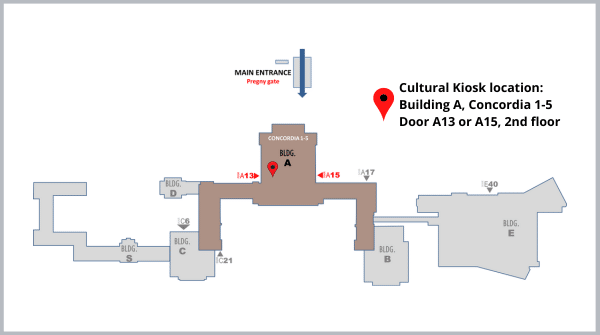


A deafening thunder, raging waves, a black sky streaked with lightning: the King of Naples’ ship did not long withstand the storm that befell it. Its survivors were shipwrecked on a remote island at sea. In small groups, they explored this mysterious and enchanting place, where melodious sounds seemed to come from nowhere. Their shipwreck, however, was not a matter of chance, but the first act of a plot hatched by Prospero, the former Duke of Milan, whose downfall they had precipitated twelve years earlier. He had found refuge on this distant island, where he had raised his daughter Miranda. Through the occult arts, he held the monster Caliban and, above all, the spirit Ariel, the key to his revenge, in his power.
In 1952, Frank Martin embarked on a German operatic adaptation of Shakespeare’s *The Tempest*, which premiered at the Vienna State Opera in 1956. Captivated by the musicality of this enchanted world, he composed a shimmering score that perfectly complemented the richness of Shakespeare’s text, performed by a symphony orchestra and an ensemble with a harpsichord in the wings. In 1967, he presented a French version in Geneva, in which Ariel was portrayed by an actor accompanied by the voices of the chorus. Nearly sixty years later, this version returns to the stage at the Grand Théâtre under the direction of conductor Thierry Fischer, a specialist in the Genevan composer. Inspired by the Bâtiment des Forces Motrices (the former power plant building) that hosts her production, Netia Jones makes the “fairy” of electricity the source of the powers of a scientist played by Stéphane Degout, and uses the magic of video to summon spirits and unleash the elements.